
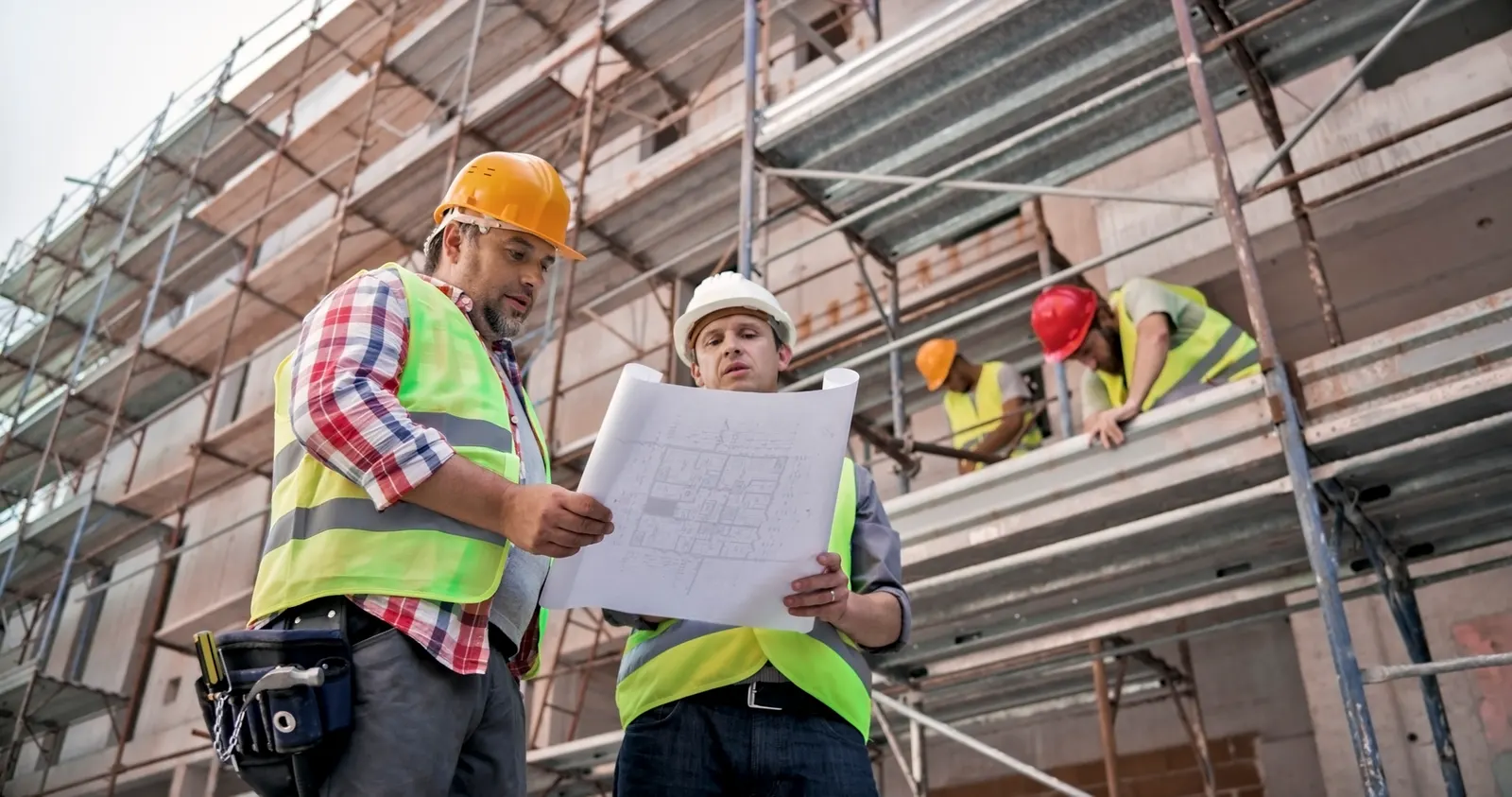
You will find foremen in many different sectors. Because TDC Groep specialises in, among other things, the construction sector, today we take a closer look at the role of (working) Foreman in construction.
What does a (working) Foreman do?
As a Foreman, you directly manage the workers on the construction site where you work. You are responsible for the day-to-day execution of specific construction activities on the site, and you also do some of the work yourself. This last point is the main difference between a Foreman and a working Foreman.
In the construction sector specifically, this means that you are responsible for planning and carrying out work within a project. You lead one or more teams and stay in close contact with the site managers to ensure the progress and quality of the project.
Tasks of a Foreman
As a Foreman, you are the point of contact for all your team members, the management and the clients. Every working day, you will fill several roles: leader, planner, coordinator and so on. Below you will find a selection of important related tasks:
1. Leading the team.
You lead a team of skilled specialists and make sure they carry out their tasks correctly.
2. Planning and coordinating.
You make sure the planning runs smoothly and coordinate the work on the construction site, so that everything goes according to schedule.
3. Supervising safety.
You make sure safety regulations are followed and help create a safe working environment.
4. Quality control.
You contribute to the quality of the work delivered, to make sure it meets the required standards and specifications.
5. Communication.
You stay in close contact with your team members and the site manager(s) to discuss the progress of the project and solve any problems.
6. Reporting.
You report back to the site manager and keep them informed about the ongoing work, quality, team members and progress.
7. Administrative tasks and solving problems.
This includes administrative tasks such as keeping track of working hours, ordering materials and checking invoices, although the last two are really the responsibility of the site manager. The Foreman can only order materials after consulting the site manager, because the site manager controls the budget.
You also solve problems that arise during the construction project. You will pass certain information on to the site manager so that they can respond to necessary changes.
8. Abstract responsibilities.
Finally, a good Foreman knows how to motivate their team, by being a hard (or smart) worker and by communicating effectively. This can sometimes be harder than it sounds, because every team member has their own way of communicating. For example, one person will respond better to harsh, direct criticism than another.
Qualities and skills
By now, you can probably work out the qualities and skills of a good Foreman yourself:
- Leadership.
- Communication skills.
- Ability to handle stress.
- Organisational skills.
Salary
Salaries depend on your level of education, work experience and the client. If you are curious, you can take a look at this open job.
Conclusion
Being a good Foreman means much more than leading teams. It requires a combination of leadership skills, technical knowledge and the ability to communicate effectively and to spot and solve problems. By continuously developing yourself and striving to improve, you can become an effective and respected Foreman.