Robotisation is a common term in this millennium. What is robotisation and what are its consequences for the labour market?
What is robotisation?
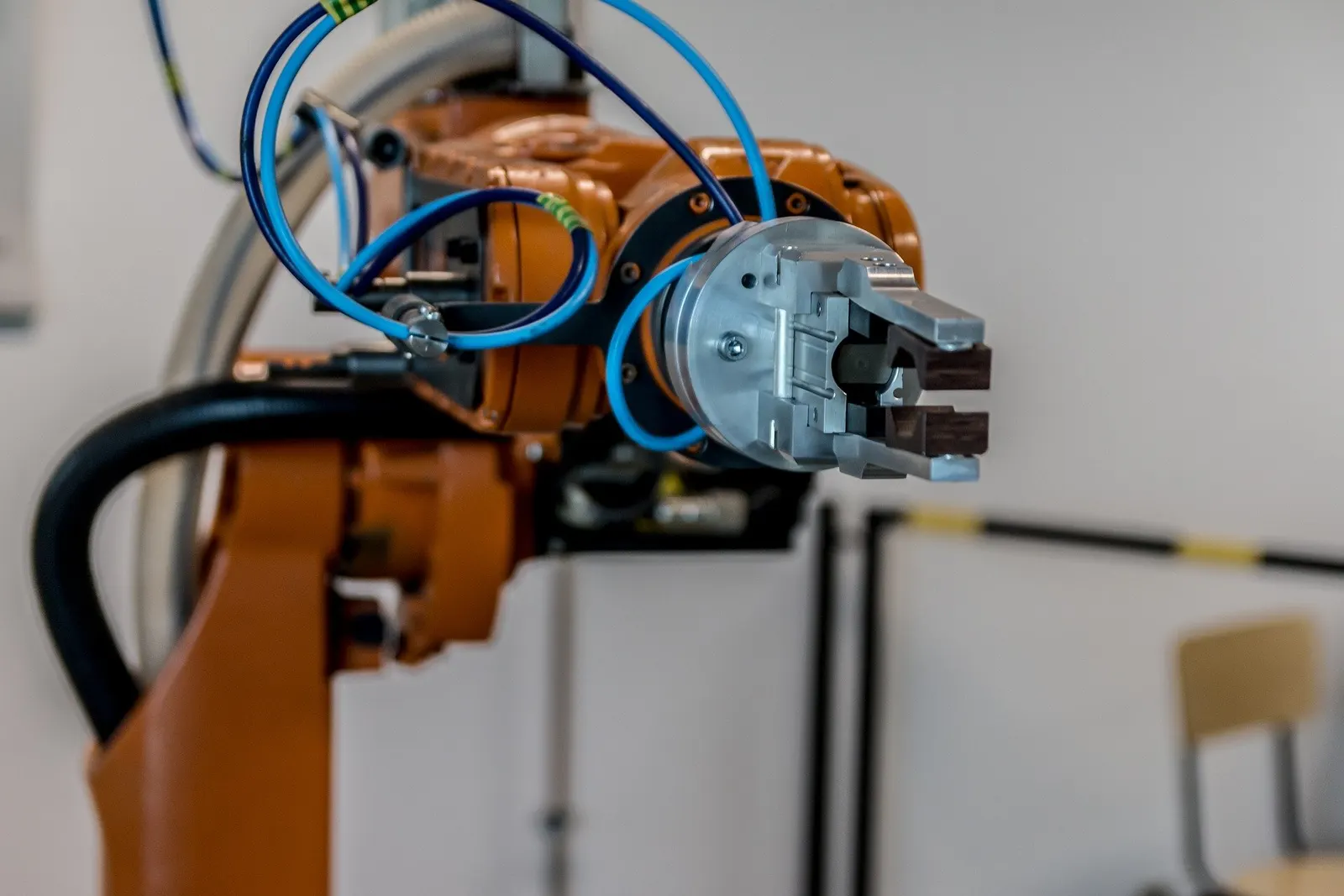
Because of the growing number of smart tools in technology, it is possible to let robots take over many more tasks. There are three types of robots: robots, cobots and cloud robots.
Robots are industrial tools that in many cases focus on only one task. Cobots are robots that work together with employees, because they can be fully programmed for the more complex tasks. Cloud robots are software-controlled robots. Examples include cloud storage, AI, big data and servers.
What are the advantages of robotisation?
By using robots, an organisation can produce more effectively and efficiently. There are even robots that carry out inspection work, which reduces the workload of employees. As a result, more checks can be carried out on production. Another advantage is that robots in fact never need to be switched off, unless maintenance has to take place. Using robots also leads to less heavy physical work, which may have a positive effect on average life expectancy.
What are the disadvantages of robotisation?
For years, people have been saying that jobs will disappear because of robotisation. This is partly true. On the other hand, new jobs will also be created. 75 million jobs will be replaced by 133 million new jobs. However, it is a disadvantage that part of the working population will have to retrain, because their jobs will disappear. A small selection of the disappearing professions: cashiers, insurance advisers, tailors, lumberjacks and meter readers.
Future prospects for the labour market in the construction and engineering sectors
Construction projects can be made more sustainable by producing more efficiently and recycling more. This will lead to major quality improvements in the construction sector. For example, from next year all new-build homes in the Netherlands must be energy-neutral, by 2030 all buildings must have an average energy label A, and by 2050 all existing buildings in the Netherlands must be energy-neutral. A circular economy is an economic and industrial system in which no finite stocks of raw materials are used up and in which residual materials are fully reused in the system. This method keeps waste to a minimum and makes parts and products as reusable as possible.
Resources are needed to achieve the sustainability methods described above, but there is still uncertainty about the investments and the labour capacity required. This will become clearer in the near future. Many projects are starting to make construction more sustainable, which means some jobs will disappear and new jobs will be created.
TDC Groep is leading the way in these developments and sees a great future for education and the Dutch workforce. Are you looking for a job in construction or engineering? Would you like to follow a free training course, so you are ready for the future and robotisation? Contact us to find out about the options.