Career guide: the CNC Milling Machinist
In this blog you can read what a CNC Milling Machinist does, where he/she can work, what your salary is in this job and what specialisations there are
Jonnie4 min read
What is a CNC Milling Machinist?
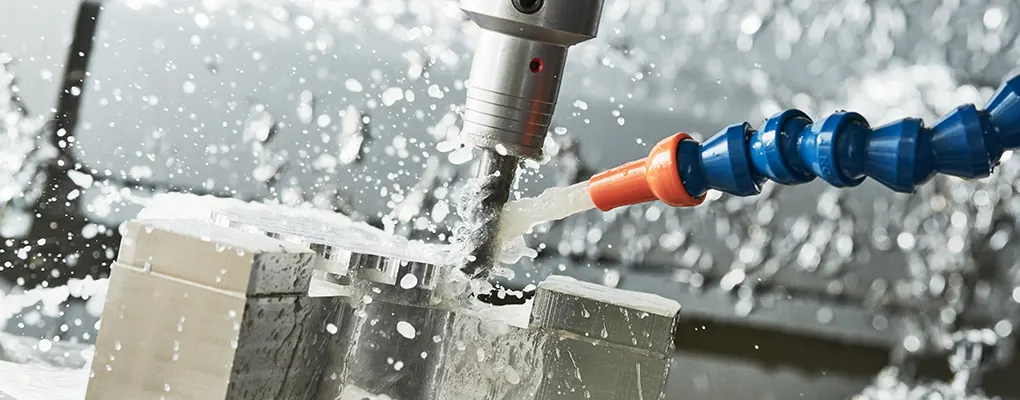
CNC milling machinists are responsible for programming, setting up and operating CNC milling machines. This includes preparing the machine by setting up and programming the tools, testing the machine to make sure it works properly, and finishing the product according to drawings and specifications. Workers must also solve any problems that may arise during the production process.
Besides the technical side of the work, CNC milling machinists often need to work together with other departments, such as designers and engineers, to make sure the product meets the customer's requirements. Even CNC routers must be operated with precision, focus and attention to detail to ensure safety, quality and efficiency. CNC milling machinists often have a technical education in metalworking or related courses, and often have production experience.
What does a CNC Milling Machinist do?
The responsibilities vary depending on the industry and organisation they work in, but some of the main tasks are:
- Machine setup: before the production process starts, the CNC milling machinist must install the right tools on the machine, adjust the cutting edge and make other adjustments to set up the machine;
- Machine operation: once the machine setup is complete, the CNC milling machine produces the parts based on the specifications programmed by the CNC milling machinist;
- Maintenance and repair: the CNC milling machinist is responsible for maintaining and repairing your machine so that it works safely and efficiently;
- Quality control: CNC milling machinists are required to inspect products to make sure they meet the customer's requirements and regulations;
- Safety: the CNC milling machinist must follow safety procedures to ensure a safe workplace;
- Communication: CNC milling machinists often work in teams and must be able to communicate effectively with colleagues, engineers, designers and customers.
In what environments do CNC Milling Machinists work?
Computer-controlled milling machines are often used in production environments such as factories and workshops where parts and products are manufactured. This can be in various industries, such as:
- The automotive industry: to manufacture vehicle parts;
- Aerospace: CNC milling can be used to make precision parts for aerospace applications;
- The medical industry: CNC milling machines are often used in the manufacture of medical devices and implants;
- Mechanical engineering: CNC milling machines are often used in mechanical engineering to manufacture precision parts for machines and installations;
- Electronics industry: CNC milling machines are widely used in the electronics industry to manufacture precision parts for electronic devices;
- The construction industry: CNC milling machines are widely used in construction to produce precision parts for building projects;
- Furniture industry: CNC milling machines are widely used in the furniture industry to produce precision parts for furniture;
- Woodworking: CNC milling machines are often used in the woodworking industry to make precision wooden parts;
- Aluminium or composites industry: CNC milling machines are widely used in the aluminium or composites industry to make precision parts for products made from these materials;
- Prototyping and low-volume production: CNC milling machines are widely used in prototyping and low-volume production to produce precision parts for R&D and low-volume production.
What specialisations can a CNC Milling Machinist have?
Computer-controlled milling machines are made and set up for different purposes. Depending on the machine the milling machinist works with, he can specialise in:
- Milling precision parts for the aerospace industry;
- Milling medical equipment and instruments;
- Cutting parts for the automotive industry;
- Machined parts for the food and pharmaceutical industries;
- Cutting parts for the electronics industry;
- Turned parts for the machine and tool industry;
- Cutting parts for the energy industry;
- Cutting parts for the petrochemical industry.
These are just a few of the many specialisations that a CNC router, and therefore the CNC-, can have. There are many other areas where CNC routers work.
What is the salary of a CNC Milling Machinist?
Do you want to apply for a job as a CNC milling machinist? Then of course you would like an indication of your salary. A CNC milling machinist in the Netherlands earns on average €2,700 gross per month. A starting CNC milling machinist earns around €2,300, and the salary of employees with more experience can rise to a maximum of €3,100 gross per month. Amounts are based on a 40-hour working week.
What skills does a CNC Milling Machinist need?
He/she must have the following skills to do his/her job properly:
- Technical skills: good knowledge of how CNC milling machines work and of the specific software used to control the machines. They must also be able to work well with precision measuring instruments and be able to carry out their work accurately.
- Mechanical engineering skills: good knowledge of the principles of mechanical engineering, such as designing and building parts and structures.
- Computer skills: being able to work well with computers and specific software programs, such as CAD/CAM software, to design and program the milling jobs.
- Problem-solving skills: quickly finding out why a machine is not working or why a part is not being milled correctly, and then coming up with a solution.
- Attention to detail: working carefully and accurately to make sure the parts being milled meet the specifications.
- Safety: knowing the safety procedures and applying them while working with the machines.
- Flexibility: being able to adapt quickly to changing working conditions and to work with different types of materials and machines.
What education does a CNC Milling Machinist need?
CNC milling machinists are usually trained in technical fields such as mechanical engineering, mechatronics and metalworking. Experience in metalworking and specific training in CNC programming and operation is also required. Some employers also require their CNC milling machinists to be certified by an authorised training centre or the National Institute of Metalworking Technology. However, the most important thing is often that a CNC milling machine operator has a lot of practical experience.