
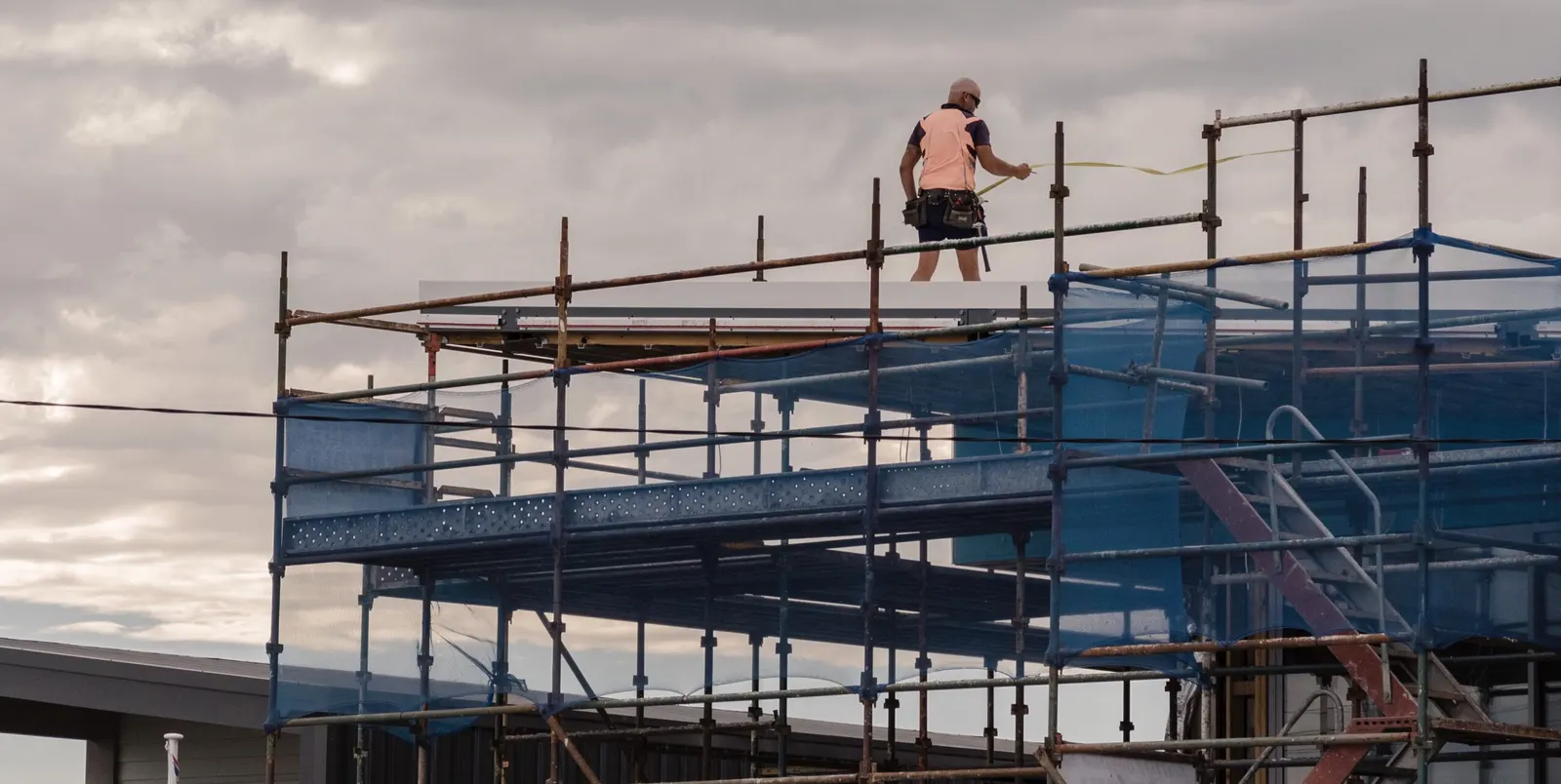
A scaffolder plays a crucial role in the construction sector. Scaffolders are responsible for safely erecting, maintaining and dismantling scaffolding, which is essential for carrying out work at height. This job requires physical strength, technical knowledge and a strong awareness of safety.
What does a Scaffolder do?
Scaffolders have a wide range of tasks and responsibilities, including:
- Preparation and Planning: Before the actual erection begins, the scaffolder carries out preparatory work. This includes discussing the client's wishes, arranging transport and deciding which machines and tools are needed.
- Erecting Scaffolding: Building scaffolding according to technical drawings and specifications. This is usually done as a team, with some team members staying on the ground to pass up materials while others work on the scaffold itself.
- Safety and Quality Control: Fitting safety sheeting and netting and making sure all safety regulations are followed. It is essential that the scaffolding is safe for other construction workers to use.
- Dismantling Scaffolding: When the construction project is finished, the scaffolding is taken down again and the materials are returned to the warehouse.
- Materials Management: Managing building materials and tools, including using cranes and aerial work platforms to move materials to higher levels.
Training and Certification
Although formal training is not always required, a diploma or certificate can offer significant advantages:
- Basic training: An MBO (Dutch secondary vocational education) course to become a Scaffolding Fitter gives you a good foundation. This course covers both theoretical knowledge and practical skills.
- Certification: Certificates such as those from DNV are often required to be allowed to work safely at height. These certificates must be renewed every five years.
Salary expectations
A scaffolder's salary varies depending on experience and location.
Salary: In the Netherlands, a scaffolder earns between €2,400 and €3,100.
Salary growth: With experience and additional certificates, your salary can increase, especially if you move up to a supervisory role such as scaffolding foreman.
Skills
Essential skills for a scaffolder include:
- Technical Ability: Knowledge of construction drawings and sketches, as well as erection and dismantling techniques.
- Safety Awareness: Thorough knowledge of safety regulations and the ability to follow them strictly.
- Physical Fitness: The work often involves heavy physical effort and working at great heights.
- Problem-Solving Skills: Being able to solve problems that may arise during construction quickly and effectively.
Career Path and Development Opportunities
There are various opportunities for career development in scaffolding:
Moving up: With experience and additional training, you can move up to roles such as scaffolding foreman or scaffolding inspector.
Specialisation: Specialisation: in certain types of scaffolding or complex projects can also lead to higher salaries and more responsibility.
Conclusion
Being a scaffolder is not just a technical job, but also a trade that requires creativity and problem-solving skills. Scaffolders are the silent force behind many construction projects, and without them many structures would simply not be possible. The work offers a unique mix of physical activity and technical challenge, and every day brings new projects and surroundings. Working outdoors makes this an attractive job for those who do not want to sit indoors all day.
And for those who are not afraid of heights and enjoy working with their hands, this job offers a stable and rewarding career in the construction sector.